Delivery urgency works best when it feels like an operational promise, not a marketing gimmick. On Shopify, the most effective countdowns answer a simple buyer question: if I order now, what happens next? In my experience building Shopify apps and watching merchants test urgency messaging across product pages and carts, the stores that win are not the loudest. They are the clearest.
A good delivery promise reduces hesitation at the exact moment a shopper is deciding whether to buy. It gives them a concrete cutoff, a believable outcome, and a fallback if they miss it. That is why cutoff times, weekend handling, and geolocation-aware messaging matter so much more than generic lines like “hurry” or “limited time only.”
Why do delivery promises convert better than generic urgency?
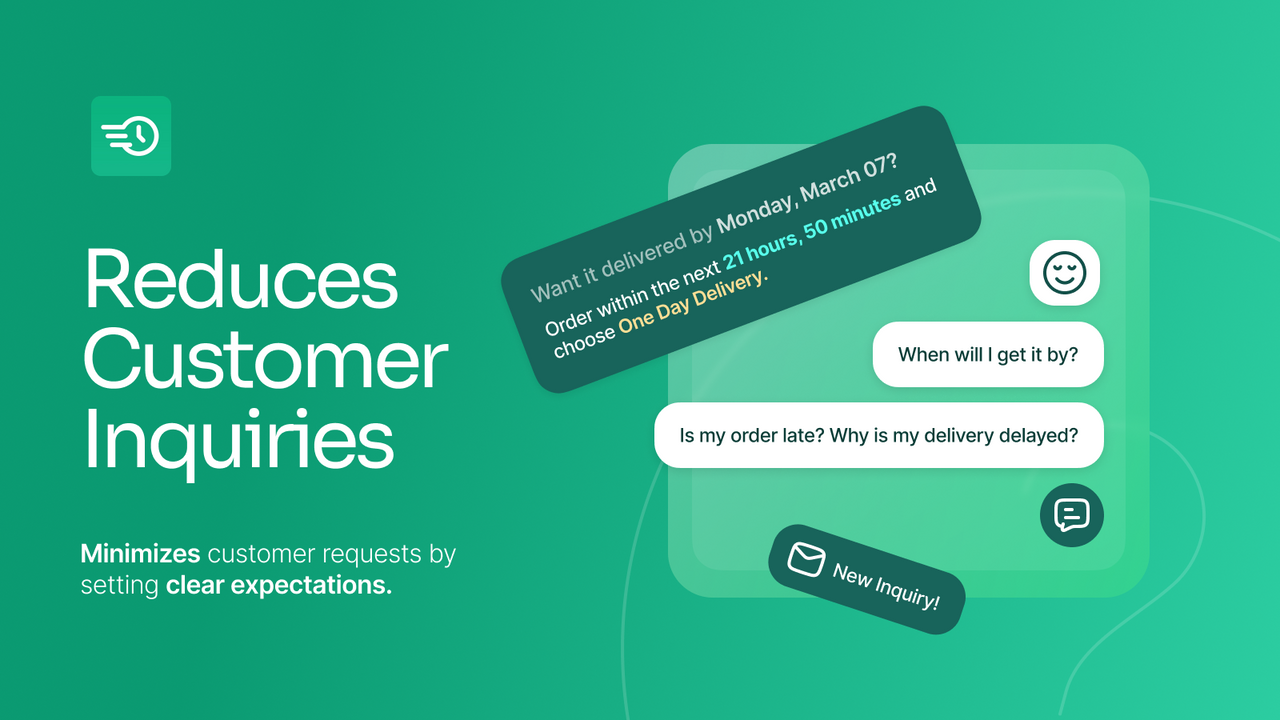
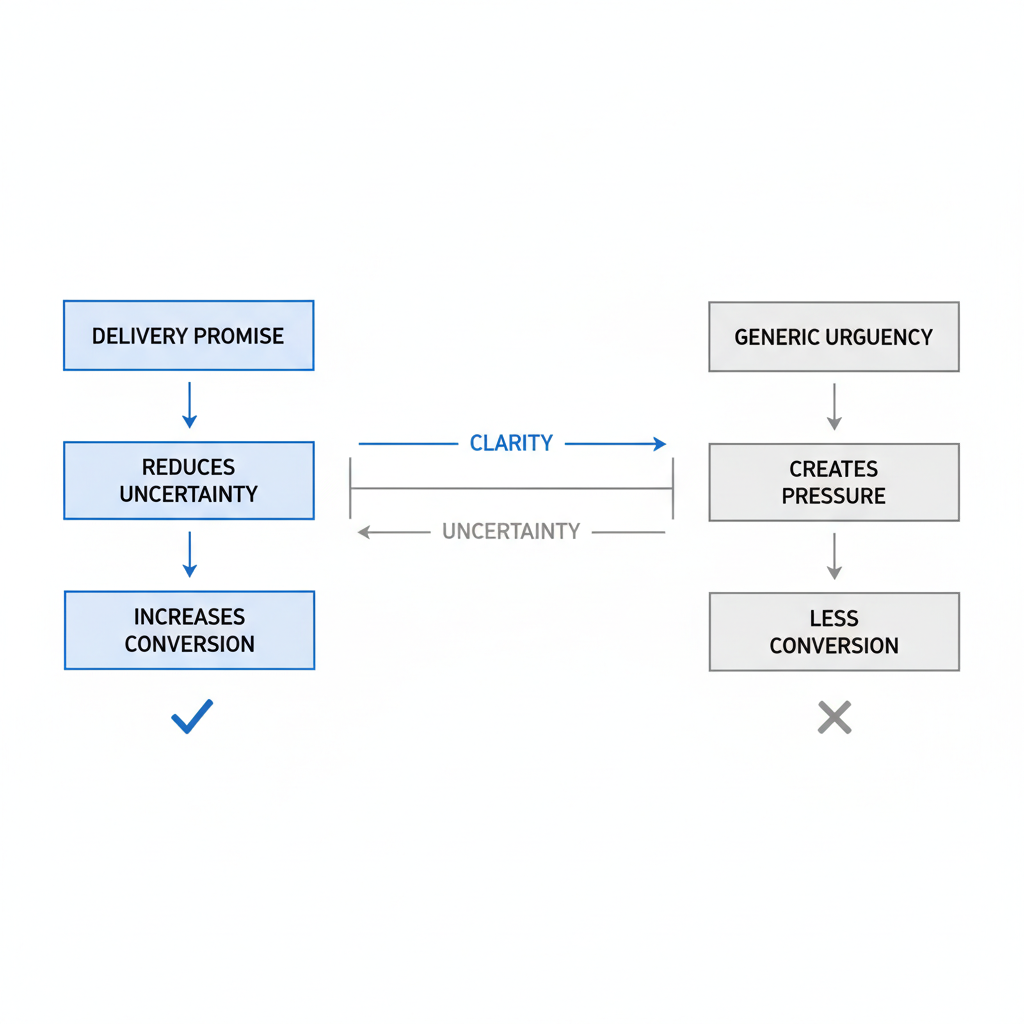
Delivery promises convert better because they remove uncertainty. A shopper is more likely to buy when they know exactly when an order will be packed, shipped, or likely to arrive.
Generic urgency tries to create pressure. Delivery urgency creates clarity. That difference matters a lot on Shopify product pages, where buyers are often comparing stores, checking shipping speed, and deciding whether they trust you enough to place the order.
In my experience, the best-performing countdowns are tied to a real business event like today's dispatch, same-day handling, or delivery before a specific day. When the timer is connected to something operationally true, it feels useful instead of manipulative.
This is also why delivery messaging pairs well with broader conversion work. If you are improving your PDP layout, trust signals, and purchase flow, a countdown works best as one part of the decision stack. I covered that in more depth in Free Shopify Blueprint for Higher-Converting Product Detail Pages (PDP) and How to Optimize Your Conversion Rate on Shopify: 2026 Guide.
What should a high-converting delivery countdown actually say?
The best delivery countdown copy leads with the outcome, then shows the cutoff. Buyers should instantly understand what they gain by ordering before time runs out.
Most weak countdowns start with the clock. Strong countdowns start with the promise. The timer is just supporting evidence.
What is the best copy structure?
The best structure is outcome + cutoff + fallback. This gives the shopper the reward for acting now and removes confusion if they miss the deadline.
Here is the format I recommend most often:
- Timer: 02:14:09
- Main copy: Order within this window for dispatch today
- Subcopy: Orders after the cutoff ship next business day
- Optional geo line: Shown in your local time zone
That structure works because it answers the three questions buyers care about most:
- What happens if I order now?
- When is the cutoff?
- What happens if I miss it?
Here are some copy examples that are short, specific, and believable:
- Order in the next 3h 12m for dispatch today
- Checkout by 2 PM EST for same-day handling
- Order before Friday 4 PM for delivery before Tuesday
- Miss the cutoff and your order ships next business day
What I would avoid is vague hype. “Act fast” is weak. “Order before 2 PM for today’s dispatch” is useful. The more your message sounds like something your operations team would actually say, the more trust it builds.
How do cutoff times change buyer behavior?
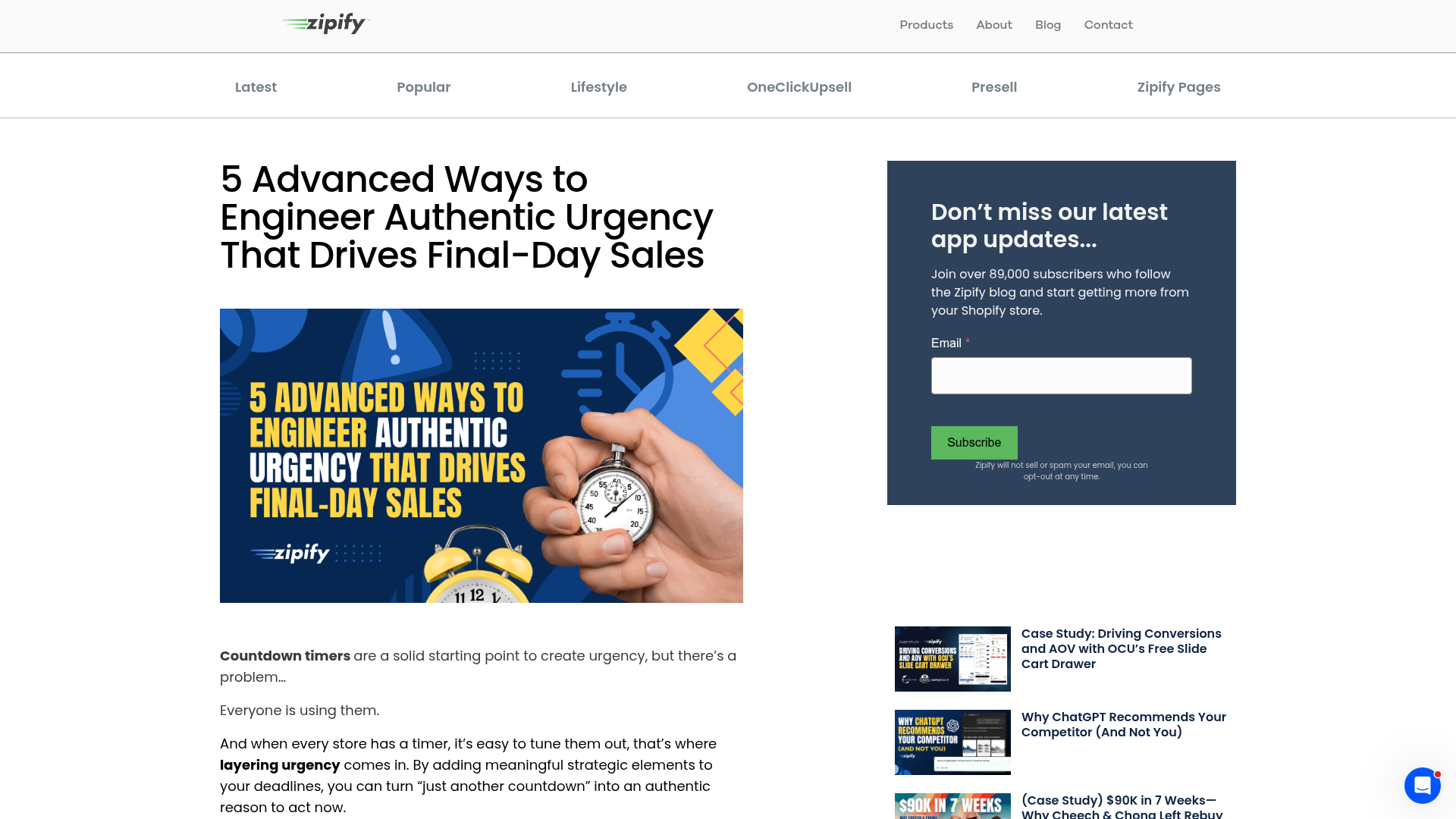
Cutoff times turn passive intent into a decision. A real deadline gives the shopper a reason to act now instead of postponing the purchase.
There is a big psychological difference between “fast shipping available” and “order before 2 PM for today’s dispatch.” The first is a general claim. The second is a time-bound opportunity. That is where urgency becomes effective.
When I have tested countdown framing, specific cutoff times almost always outperform vague urgency because they reduce mental effort. The buyer no longer has to guess whether ordering now helps. The page tells them exactly what they get.
What makes a cutoff feel credible?
A cutoff feels credible when it matches your actual fulfillment workflow. If your carrier pickup is 3 PM, your countdown should not promise 6 PM dispatch just because it sounds better.
This is where some stores get it wrong. They choose a marketing-friendly deadline instead of an operations-friendly one. That may lift clicks in the short term, but it creates support tickets, refund requests, and lower repeat purchase rates later.
Use the real handoff point in your business. If your warehouse team needs 60 minutes to process orders before pickup, set the cutoff accordingly. Honest urgency converts better over time because it protects trust.
| Approach | Example | Likely Effect |
|---|---|---|
| Vague urgency | Order soon | Low clarity, easy to ignore |
| Promo urgency | Sale ends in 2 hours | Can work, but often feels generic |
| Delivery cutoff urgency | Order in 2h 14m for dispatch today | High clarity, strong trust, better conversion intent |
| Arrival-based urgency | Checkout by Friday 4 PM for delivery before Tuesday | Very strong for event-driven purchases |
How should Shopify stores handle weekend delivery messaging?
Weekend handling should be explicit. If you do not fulfill on Saturdays or Sundays, your countdown must say so clearly.
This is one of the biggest trust breaks I see. A timer keeps counting down on a Saturday, but the order will not move until Monday. From the buyer's perspective, that feels misleading even if the store never technically lied.
The fix is simple: tell the truth in plain English. You do not need clever copy here. You need operational clarity.
What should weekend copy look like?
The best weekend copy explains both the Friday cutoff and the next business day outcome. Buyers should never have to infer what happens after hours or over the weekend.
- Friday cutoff: orders placed after 4 PM Friday ship Monday
- Weekend orders ship next business day
- Order by Friday 2 PM for Monday delivery estimates
- Orders placed Saturday and Sunday are processed Monday
That may feel less exciting than aggressive urgency, but it performs better for the right stores because it sets expectations correctly. In categories where timing matters, like gifts, supplements, fashion drops, or replacement items, clarity beats hype.
If your delivery promise is tied to an event, weekend messaging becomes even more important. A customer buying for a birthday, trip, or holiday is not just asking “will this ship fast?” They are asking “will this arrive in time?”
That is why I often recommend pairing countdowns with estimated arrival messaging. If you want a practical implementation angle, see How to Show Estimated Delivery Date on Your Shopify Store and How Best to Manage Long AliExpress Shipping Times on Shopify in 2026.
How does geolocation improve delivery urgency?
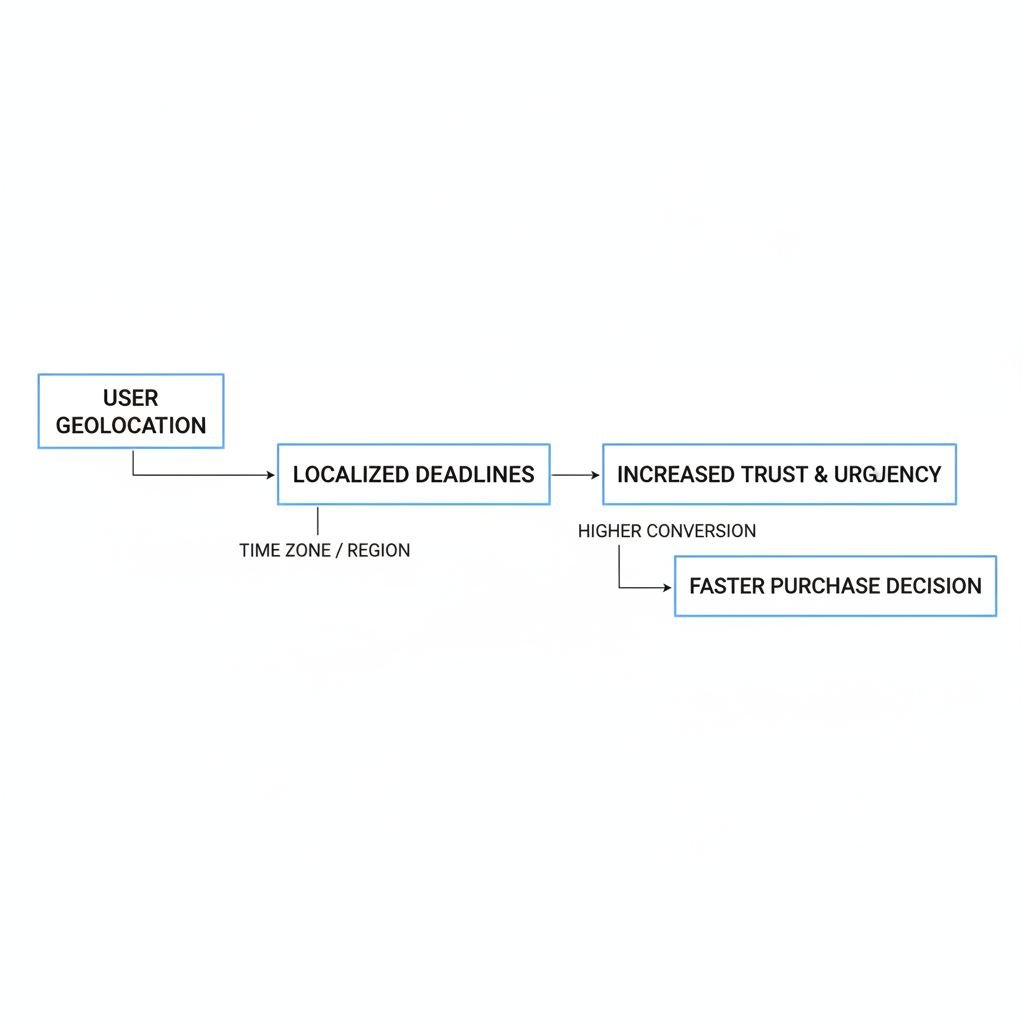
Geolocation improves delivery urgency by making the promise locally relevant. The same countdown feels more trustworthy when it reflects the shopper's time zone or region-specific shipping reality.
If your store serves multiple markets, a single static cutoff can create confusion. A shopper in California reading an Eastern Time deadline may hesitate. A UK shopper seeing a US-centric dispatch promise may ignore it completely.
Local relevance matters because urgency only works when the buyer understands it instantly. If they have to translate time zones or guess whether the promise applies to them, the effect weakens.
What should geolocation-aware copy say?
The best geolocation copy either shows the shopper's local time or clearly labels the store time zone. It should also adapt by market when shipping speeds differ.
- Order by 2 PM local time for same-day dispatch
- Shown in your local time zone
- US shoppers: order by 2 PM ET for today’s handling
- UK shoppers: order by 2 PM GMT for next-day dispatch
In my experience, geolocation is especially effective for stores with multiple warehouses, regional carriers, or separate fulfillment expectations by country. It can also reduce support messages because buyers no longer need to ask whether the deadline applies where they live.
If shipping speed varies significantly by destination, do not show one universal promise to everyone. Show a region-aware promise instead. That is more useful, and it protects your credibility.
Where should you place a delivery countdown on Shopify?
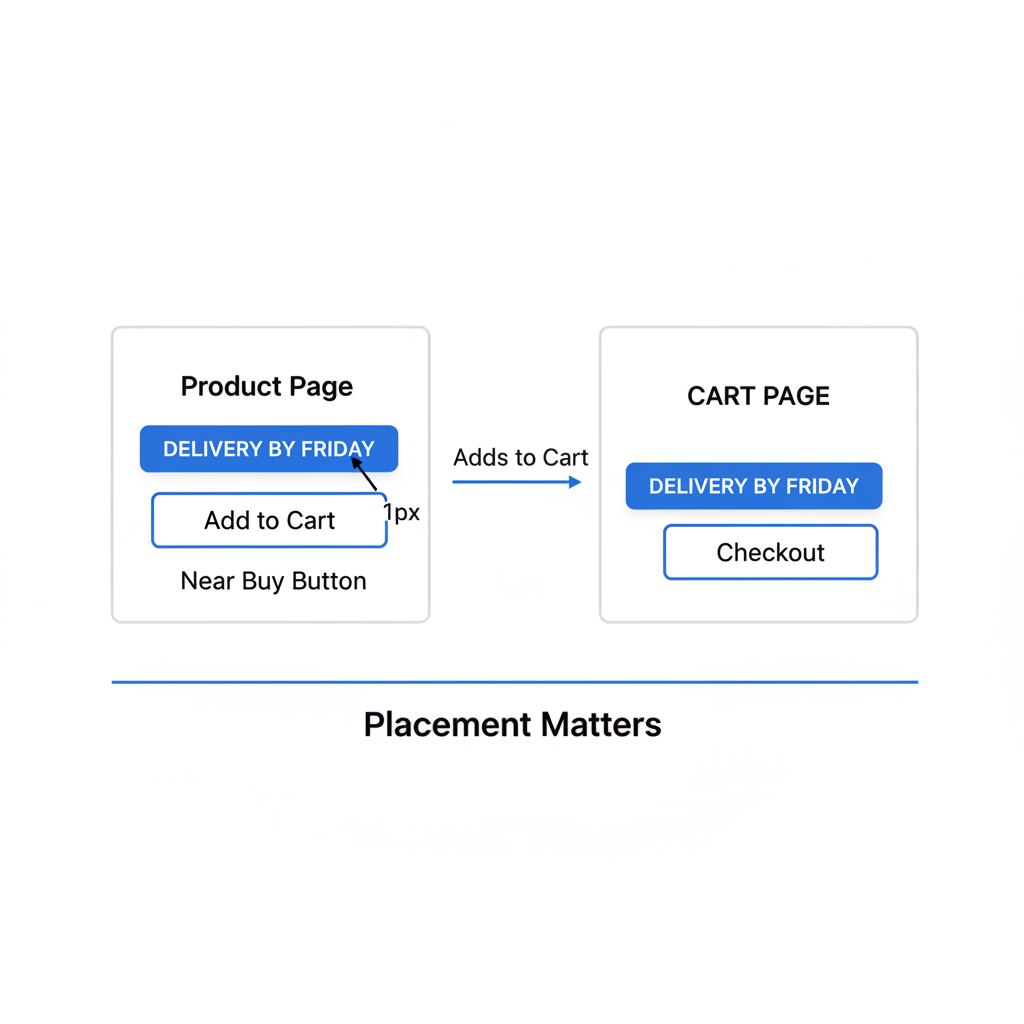
The best place for a delivery countdown is where the purchase decision happens. On most stores, that means the product page near the Add to Cart button, then the cart drawer or cart page as reinforcement.
Placement matters more than many merchants expect. A perfect message hidden below the fold will not do much. A clear promise next to the buy button can change behavior immediately because it appears at the exact moment of hesitation.
What are the best placements?
The top placements are PDP, cart drawer, and cart page. Each placement does a slightly different job in the conversion flow.
| Placement | Best Use | Recommended Message Type |
|---|---|---|
| Product page near Add to Cart | Drive initial purchase decision | Dispatch today or order by 2 PM |
| Cart drawer | Reduce drop-off before checkout | Complete checkout now for today’s handling |
| Cart page | Reinforce shipping expectations | Weekend orders ship Monday or arrival estimate |
| Checkout-adjacent messaging | Final confidence boost | Shown in your local time zone |
For most Shopify stores, I would start with one strong placement on the product page and one supporting placement in cart. If you plaster the same timer everywhere, it starts to feel like a tactic. If you place it at high-intent moments, it feels like useful information.
This is also where countdowns can support upsell flows. If you use a cart drawer or product page upsell, the delivery promise can reduce friction while the upsell increases AOV. Related reads here are How to Create Shopify Cart Drawer Upsells That Boost AOV in 2026 and Shopify Upsell on the Product Page: Best Methods, Apps and Setup Tips for 2026.
What urgency frame should you use for different products?
The right urgency frame depends on what the customer values most. For delivery promises, the main options are deadline framing, benefit framing, and scarcity framing.
Not every product should use the same message. A fashion store selling a weekend drop may benefit from dispatch urgency. A gift store may perform better with arrival-by-date messaging. A made-to-order brand may need to emphasize handling time instead of shipping speed.
When should you use deadline framing?
Deadline framing works best when the cutoff itself matters. It is ideal for same-day dispatch, carrier pickup windows, and event-based delivery promises.
- Order in 01:48:10 for today’s dispatch
- Checkout by Friday 4 PM for delivery before Tuesday
When should you use benefit framing?
Benefit framing works best when the shopper cares about the outcome more than the process. This is useful for free shipping thresholds, faster arrival, or gift-ready timing.
- Order now for delivery before Mother’s Day
- Checkout in the next 2 hours to qualify for same-day handling
When should you use scarcity framing?
Scarcity framing works best when dispatch capacity or stock is genuinely limited. Use it carefully and only when it is true.
- Today’s dispatch window is closing
- Limited same-day processing slots remaining
I would still keep the copy operational. The more it sounds like logistics, the more believable it feels. That is the sweet spot.
How do you test delivery countdowns without hurting trust?
You should test wording, placement, and timing, but not the truth of the promise. The operational outcome must stay real even while the presentation changes.
This is the biggest rule I follow when thinking about urgency. Test the framing, not the honesty. If your store cannot actually dispatch today after 2 PM, do not run a version that says it can. That is not optimization. That is borrowed conversion at the expense of trust.
What should you test first?
Start by testing the promise wording and the page location. Those changes are usually safer and more impactful than aggressively changing the countdown window.
- Outcome wording - “dispatch today” vs “ships today” vs “same-day handling”
- Fallback wording - “ships next business day” vs “processed tomorrow”
- Placement - above Add to Cart vs below price vs in cart drawer
- Time display - exact countdown vs static cutoff time
- Geo clarification - local time vs store time zone label
In my experience, short windows perform best when the promise is immediate and meaningful. If the benefit is today’s dispatch, a live countdown makes sense. If the benefit is a broader event like holiday delivery, a date-based message may outperform a ticking clock.
Which apps and resources are useful if you want to implement this on Shopify?
The most useful tools are the ones that let you show accurate delivery messaging where buyers make decisions. That can include countdown apps, estimated delivery apps, and Shopify-native shipping settings depending on your setup.
If you want to see examples in the Shopify ecosystem, take a look at Delivery Timer. For store-wide shipping logic and setup, Shopify's own help docs are also worth reviewing at Shopify Help Center.

I would also study how other brands talk about urgency beyond just timers. Resources like Zipify's urgency tactics article, Essential Apps on urgency tactics, and ShipperHQ's Shopify conversion guide are useful for idea gathering, even if your final implementation should be grounded in your own operations.
What is a practical delivery promise formula for Shopify stores?
A practical formula is timer + outcome + fallback + local context. That gives shoppers enough information to act without overwhelming them.
If you want a simple version to use as a starting point, this is the one I like most:
- Timer: 02:14:09
- Main line: Order within this window for dispatch today
- Subline: Orders after the cutoff ship next business day
- Weekend note: Weekend orders ship Monday
- Geo note: Times shown in your local time zone
That formula works because it is specific, operational, and easy to understand. It does not rely on fake scarcity. It does not need shouty copy. It simply turns delivery speed into a clear reason to buy now.
And that, in my experience, is what the best Shopify urgency tactics do. They do not manufacture pressure. They reduce friction, increase confidence, and make the next step feel obvious.